

4 Best Ways to Run Windows On Mac (How to)
Windows and Mac OS X are inherently different operating systems, fifty-fifty if both of them serve the aforementioned purpose of personal computing. There is besides no denying the fact that Microsoft'southward offering is by far the more popular one, with a number of applications available just for Windows that you can detect alternatives for on Bone X, only they themselves are unavailable. The same holds truthful for a vast number of gaming titles, which are primarily considered a forte of Windows. This becomes a challenge when you own a arrangement that's basically meant to run Mac, and/or you work in an environment that requires Windows-based programs for operation.
When I migrated to Mac a couple of years ago, I never really looked back, merely despite my bias toward OS X as a superior operating system, the need to run Windows applications was inevitable. I fully acknowledge that I am non the merely one facing this dilemma either, so this article here outlines the best means to either run a full diddled version of Windows on your Mac, or run Windows programs whilst staying within Bone 10.
Annotation: The requirements for running Windows on a Mac varies with unlike systems and the versions of Windows Bone that y'all're attempting to employ. For the purpose of this article, we'll be talking about 64-chip Windows 10 Professional person running on a Macbook Pro xiii″ with Retina display, having a Cadre i5 processor, 8GB RAM and 256GB SSD.
Here's How to run Windows on Mac
Parallels Desktop
Parallels has fabricated a proper name for itself for being (arguably) the all-time way for running Windows on a Mac. At the core of it, Parallels creates a virtual machine that can either run every bit a separate interface carrying your Windows installation, or can even seamlessly integrate with Mac courtesy of its "Coherence" mode, which is a great solution if you merely need a few specific Windows apps running as part of your regular Os.
Setting Up Parallels Desktop
To fix Parallels Desktop, you need to commencement download the software and obtain an ISO of the Windows version that you want to run (along with product key, of course, just similar you'd do with a normal Windows installation). Launch Parallels Desktop and since y'all don't already have an existing virtual motorcar, the software will automatically go to the new VM setup screen. Here, you lot actually get a bunch of options. You can either ready upwardly a new Windows installation or drift Windows from an existing PC, along side a number of free resource including automatic downloads for Chrome OS, Linux, Android or even OS Ten installation from a recovery division, to proper noun a few. If you have an existing virtual automobile file available, yous may add that to set it up with Parallels, too.
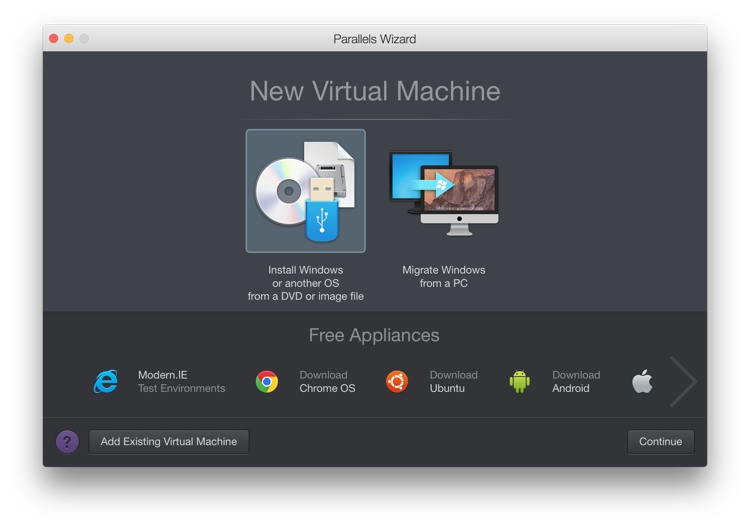
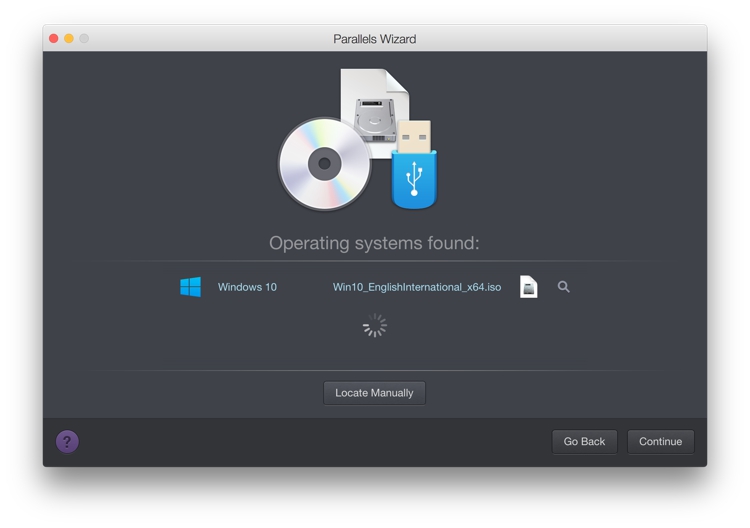
Hit the new Windows installation selection, and Parallels volition auto-scan your hard drive or attached USB drives for Windows ISO images. If yous have multiple ISOs available, all of them will be listed. Alternatively, yous can manually signal to one as well if the software cannot car-locate, or if you have the installation image in a network location.
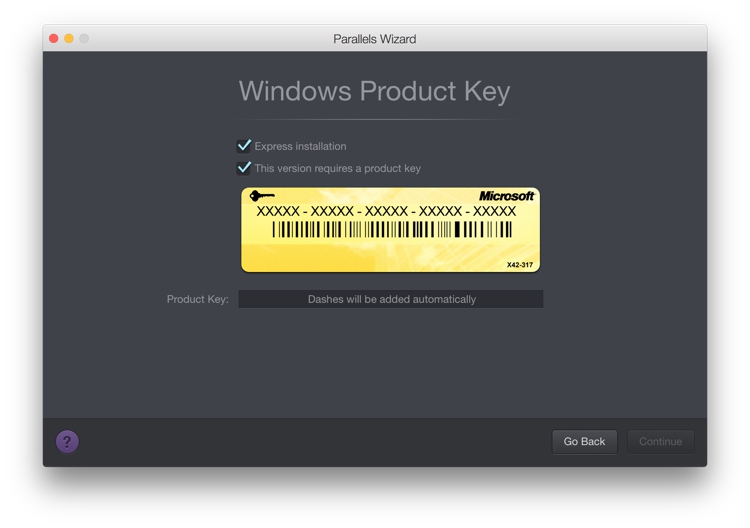
Because Parallels is tuned to handle Windows installations on a Mac, the side by side screen offers y'all to behave an "Express installation," which basically means that you don't have to become through any of Windows settings screens for this installation – everything will be washed based on recommended settings. At this screen, you may besides provide your Windows product cardinal which will get added automatically during the installation process. You lot may, of course, forego this per your preference.
Annotation: For this commodity, nosotros're going ahead with Limited Installation.
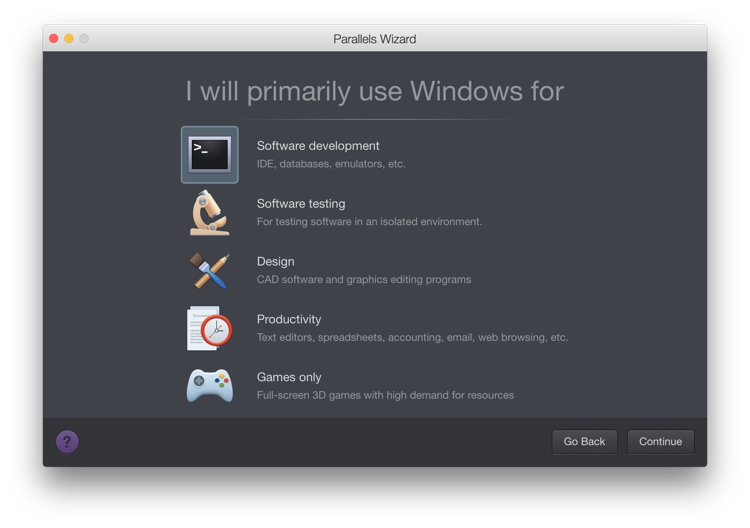
The next screen volition ask you for your primary usage of this Windows installation, where yous have options to selection from Software Evolution, Software Testing, Designing, Productivity and Gaming. Since every virtual machine has its own set of configurations in terms of allocated RAM, video retention, CPU and storage, Parallels will auto-suggest a VM configuration based on the usage pattern that you place during this part. All of this changeable afterward on, of grade, only the whole idea with Parallels is ease of getting up and running, and so, these auto-configurations will agree true most of the fourth dimension if yous select the appropriate utilize case.
The side by side screen asks for the name of the virtual auto and where it will be located. Over hither, y'all have a agglomeration of other options every bit well, like whether to share this VM with other users of your Mac, include a desktop shortcut or whether to customize the VM settings before setting it upwardly. You will also run into how much space is available and how much of information technology will be taken up by the virtual car.
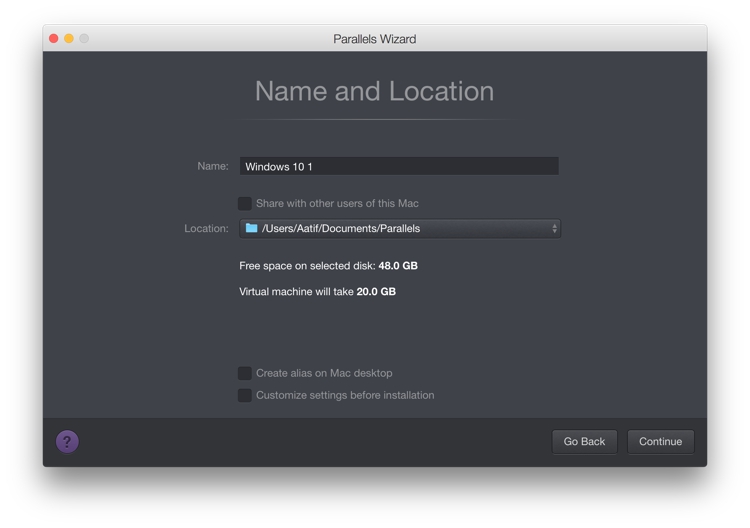
Once y'all continue from this point, the installation for Windows volition begin. You lot volition need to yet go through "some" steps in Windows installation, merely virtually of it will exist a smooth sailing process, and in under one-half-an-hr, you lot will take your Windows virtual machine up and running with ease.
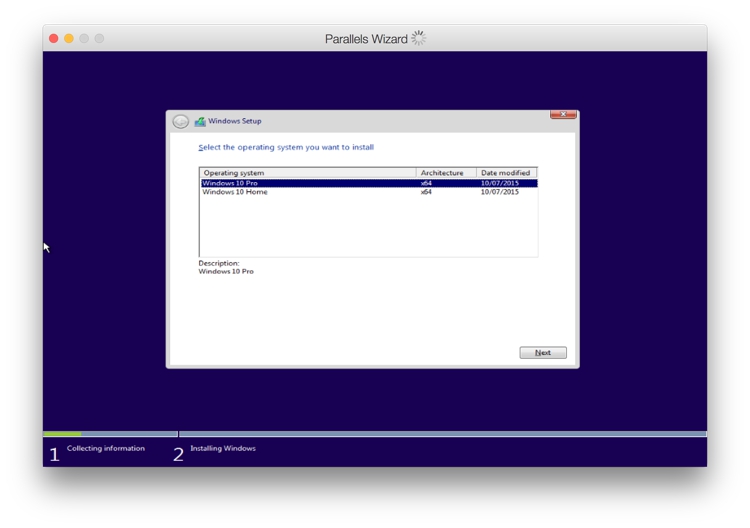
Please note that this is in no way an exhaustive guide to using Parallels Desktop – this is just to give you an idea of how to fix it up and go it running. The plan is extensively exhaustive, and the official Parallels Website offers a wealth of cognition and tutorials for in-depth usage. Every virtual car inside Parallels comes with its own configuration panel that will allow you to change and manipulate a bunch of options, from hardware to software and integration with Bone X.
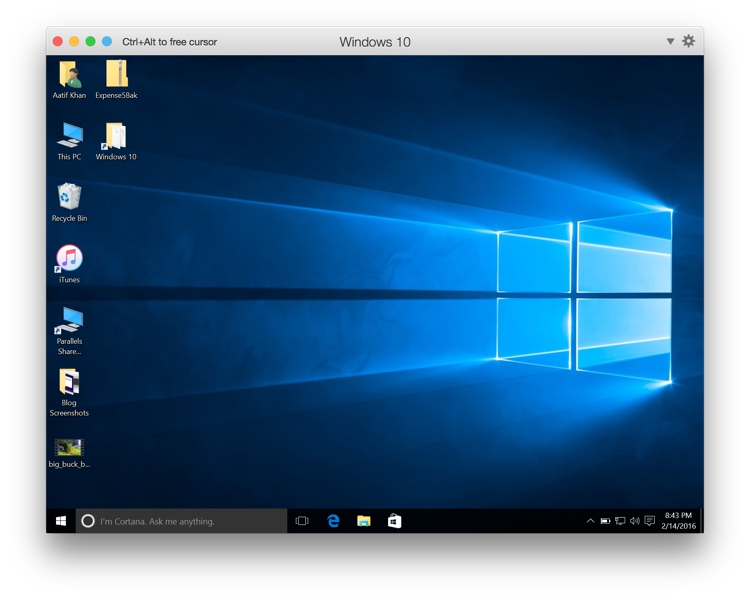
Pricing & Verdict
Parallels Desktop comes in various flavours and pricing options, with the best one being for dwelling house & student apply. This version, yous can grab at $79.99 one-time, or a yearly payment programme like a subscription. While it might seem a little pricey, realise that Parallels Desktop offers the all-time experience among all possibilities, and hence, comes highly recommended. Information technology also offers a free xxx-24-hour interval trial if y'all want to first take it for a test ride. Oh, and Parallels keeps holding sales with really practiced bargains from time to fourth dimension, so you should at to the lowest degree sign upwards for their newsletter to become it while its up for grabs at a reduced price.
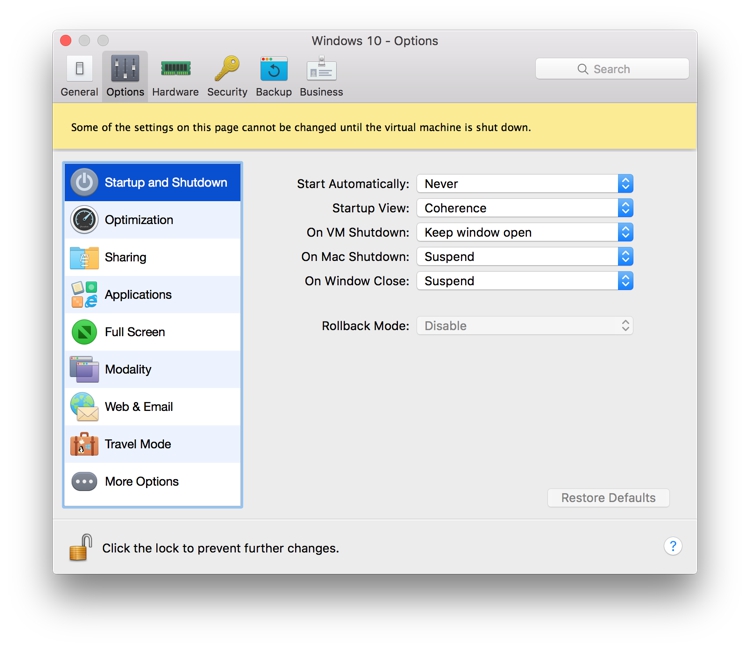
While running a Virtual Automobile is never the most optimal experience, Parallels has actually bridged the gap in its years of evolution. The VM runs smoothly, works independently, and the coherence mode really makes information technology experience like you're using Windows apps on your Mac instead of a VM. What'southward even amend, this is one of those few software that allows you to fully leverage the hardware capabilities of your Mac, including USB iii.0 ports, lightning connectors and fifty-fifty the retina brandish, cheers to its deep integration. Your files are conveniently shared, elevate & drop is fully supported, and generally, yous'll be hard pressed to tell information technology autonomously that you're running two split up Os on your machine. I highly recommend you lot give Parallels Desktop a endeavor before resorting to an alternative.
VMware Fusion
VMware Fusion is another pick that's like to Parallels Desktop on the front, simply differs considerably in its setup, appearance and other facets. The bones premise, nonetheless, remains the same with both of them: both create a virtual machine that will run your Windows installation inside a Mac. With VMware Fusion, y'all get a long history of dealing with virtual machines at a professional person level and providing virtual calculating solutions, so Fusion is worth checking out.
Setting upwards VMware Fusion
From the get go, you volition begin to run across the differences between Fusion and Parallels. From launch, Parallels is all most ease and getting ready in the least number of steps possible. Fusion, on the other paw, is different. The beginning screen offers a bunch of installation sources, including from a disk image, migrating from an existing PC, from bootcamp – basically everything that Parallels offered. However, a quick comparison even of the screenshots that we provided volition tell you that Parallels is more than practiced looking and straightforward, with VMware being the disruptive one.
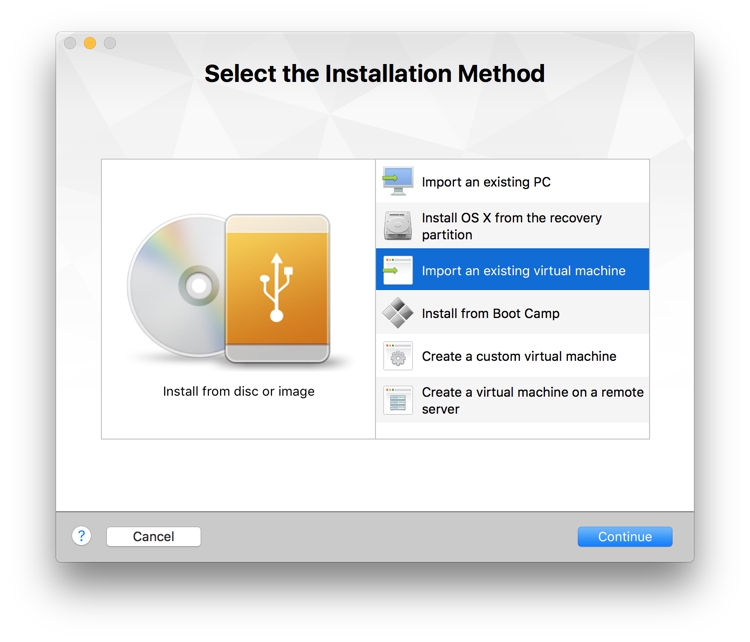
For the purpose of this article, we're naturally going with installation from a regular ISO.
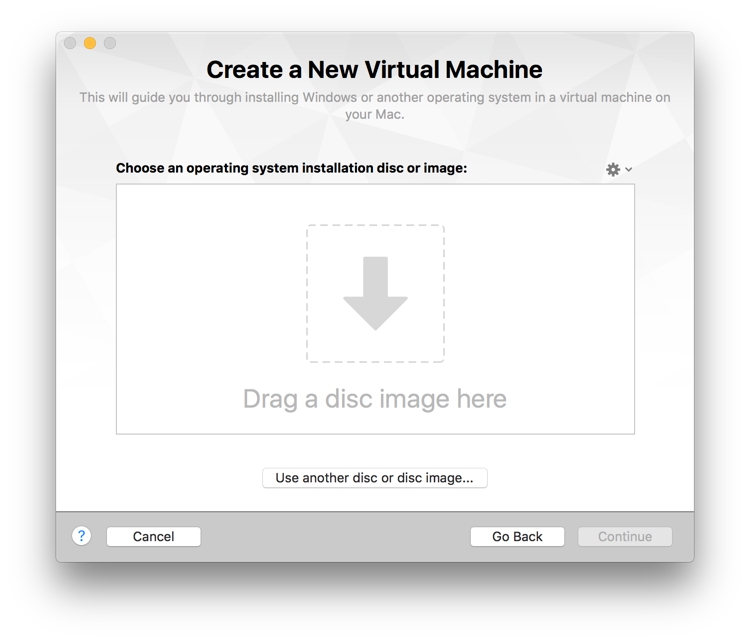
In the 2d stride, you'll clearly see the stark departure from Parallels, where Fusion doesn't actually locate any ISOs on your difficult disk no thing where they are. Rather, you're required to manually point to the ISO in question that y'all want to install from.
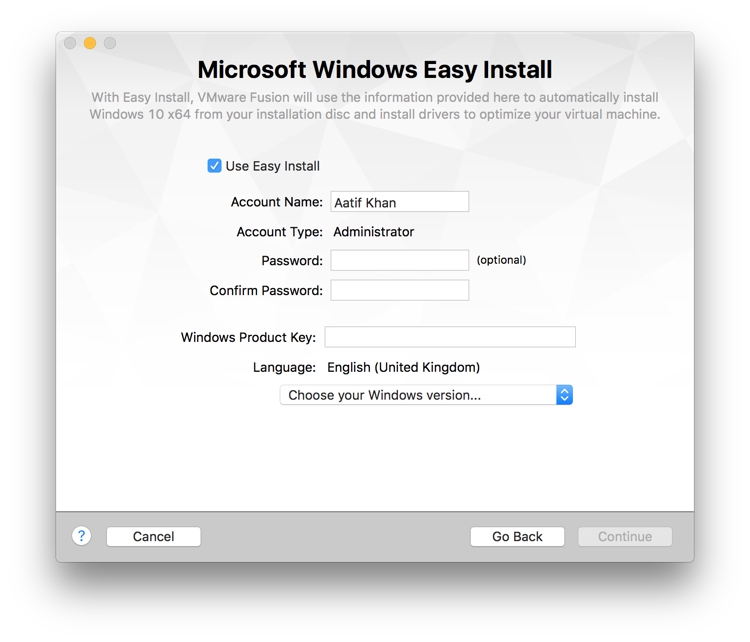
The next step allows you to configure your Windows installation business relationship, giving y'all the pick to pick the business relationship proper name, an optional password, provide the Windows product central, and, something where Fusion has a clear border over Parallels, selecting the version of Windows that you want to install. This is useful if your ISO contains installation files for more than i version, because yous tin select off the bat which Windows yous want to go up and running. Oh, and at that place's an easy install choice here equally well.
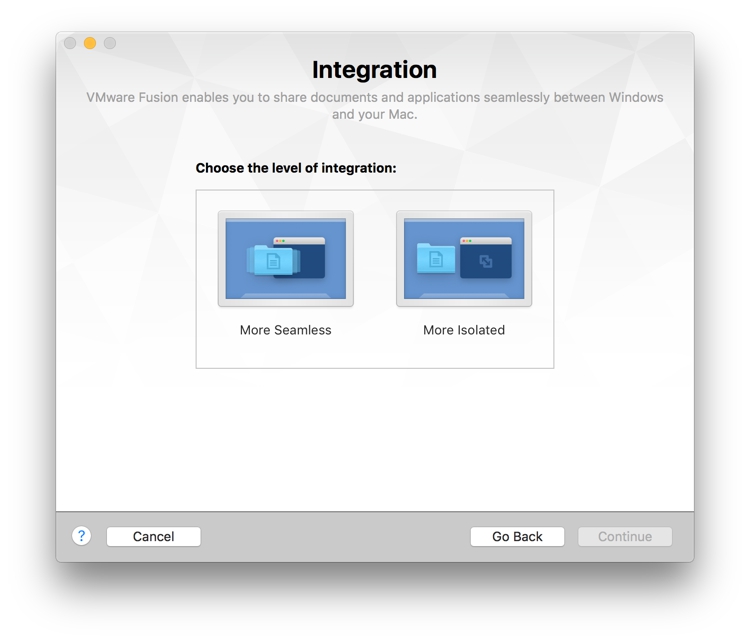
The next stride deals with the integration that you want to have between Windows and OS X. Akin to Parallels, Fusion also allows y'all to run a sorts of Coherence mode (called Unity in this instance), where Windows won't conduct like a carve up installation just have a closer connection with the default Bone X.
The final step gives you an overview of your installation options, and supposedly allows configuring the virtual automobile. I say supposedly considering even if you opt for that, you can basically alter the save location for the VM file and zero more. Fusion takes care of everything else past itself. This can be interpreted equally a double-edged sword; you are saved configuration hassle, simply at the same time, you lot have bottom control over various aspects when creating the VM.
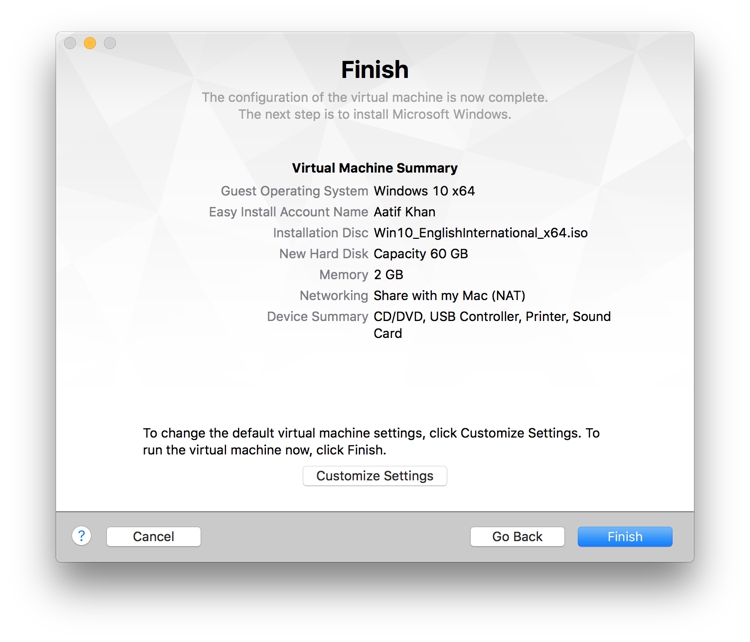
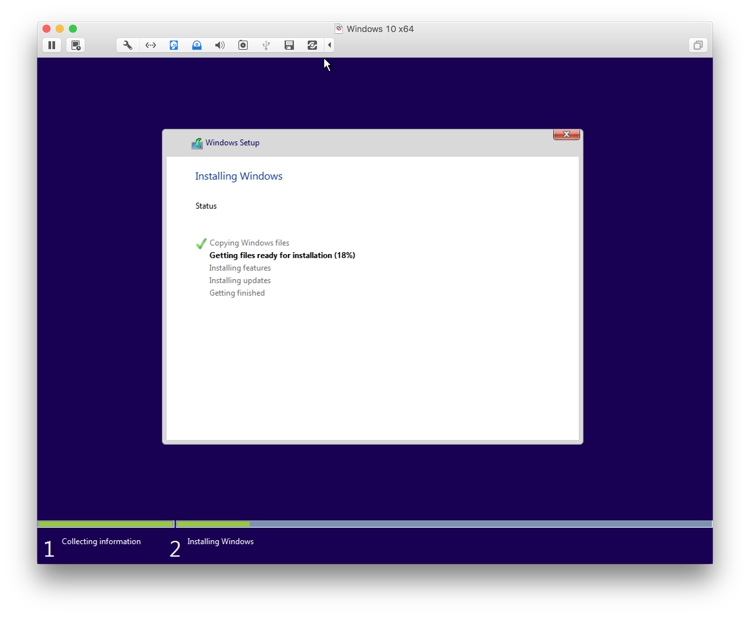
Across this point, you can pretty much sit down dorsum and relax equally VMware Fusion takes care of your Windows installation. One major advantage that yous become here over Parallels is that because you took intendance of all the settings beforehand, you don't accept to do pretty much anything during the installation – Fusion remembers all your settings and implements them as the time comes for them all. This is honestly the most seamless installation of Windows I've ever seen, menstruum.
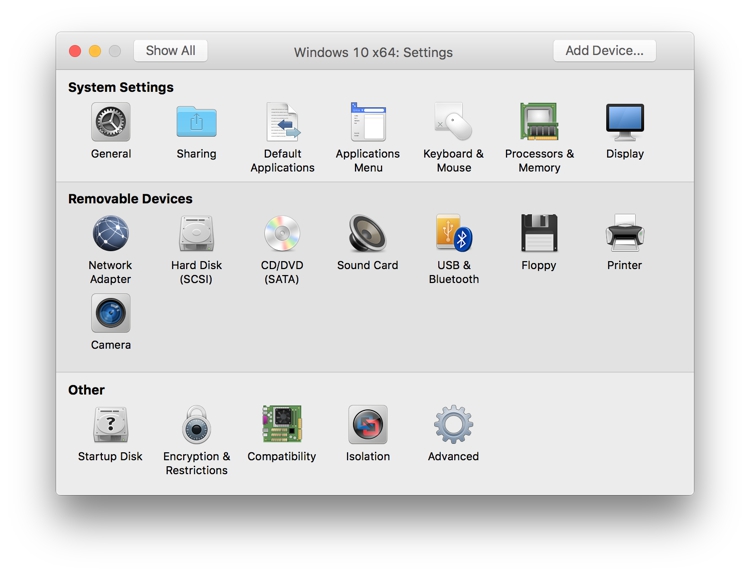
Customizing VMware Fusion Virtual Motorcar
Because Fusion doesn't allow customization of the VM during installation, it's important to take a look at the configuration pane y'all can access once your VM is upwards and running. The first affair that you'll notice is how like Fusion'southward configuration pane looks to Bone X's default System Preferences, with every choice laid out just like yous have natively. This makes navigating around the options much easier, consequently making this a more pleasant feel (this is subjective, of course). With respect to the number of options that yous go, they are also better and more diverse than Parallel's offering, giving a more granular control. It'due south also easier to access these settings compared to Parallels, just we'll comment on that in the verdict.
Pricing & Verdict
When information technology comes to pricing, there is hardly whatsoever difference, with Fusion also coming in at $fourscore approximately, and coming with a gratis trial. While it doesn't offer as much flexibility in pricing plans as Parallels does, some people might capeesh this simpler, more to-the-bespeak arroyo over Parallels' more complex offering.
VMware has a long history of making and managing virtualisation software, and Fusion viii is honestly a testament to that. There are several things to like in Fusion: it's ability to install Windows seamlessly, the fact that it places the most used VM controls at a click'south distance which are rather complicated in Parallels (like Settings, Snapshot, Sound, Photographic camera etc), and that information technology only feels more robust when it comes to reliability. One of the biggest bonuses that Fusion brings over Parallels is how it can leverage an existing Bootcamp Windows installation, where you can simply call on that installation to run Windows programs within Bone X without having to jump back and along. With a 256GB SSD, this is a real blessing as information technology saves those precious gigabytes that you would otherwise take lost to a dual installation.
Another aspect that I want to touch on is power consumption. If you lot're plugged in, this shouldn't be any consideration, merely if you lot use your Macbook on battery oftentimes, you might find Parallels a better choice than Fusion. In my feel, running the same VM in Parallels is friendlier on not but the battery simply besides the cadre temperature, as the same on Fusion started pushing the core temperature well by 70°C, resulting in a college battery bleed. Oddly plenty, I did non observe that while the Macbook was plugged in, so that might have to exercise with power source as well.
Overall, Fusion delivers a solid, punch-packing experience that you should definitely have for a spin. Since both Parallels and Fusion offer complimentary trials, you should endeavour them both before making the decision to stick with one. While I still favour Parallels, that's a personal choice, and I encourage y'all to make yours.
Other Options
The options that we've discussed and so far are beyond argument the best ones to get the all-time of both worlds, but they're not all. There are ii more than that need to be discussed when nosotros're talking of all-time ways to run Windows on a Mac.
Boot Camp Assistant
If you've ever wanted to run Windows on your Mac, it'southward about impossible that y'all won't have heard of Boot Camp. It'southward a native Bone X application that allows for a total Windows installation on your Intel-based Mac (Intel-based beingness the operative word here). If information technology's native, why didn't we recommend information technology in the starting time place? Considering Boot Camp creates a dual booting organization, and that doesn't really cut it for anybody.
Setting upwards Boot Camp is fairly easy. Just launch it from the Launchpad or through Os X search, and follow the on-screen instructions. You need to have the Windows ISO image and production key handy, of course, merely ane major reward is that Apple tree with automatically download and provide the necessary Windows drivers for your Macbook, making information technology a very convenient option if you don't mind rebooting into the other Os every fourth dimension you need something from the other globe. And because it'southward a separate installation for which a separate NTFS partition is created on your hard disk drive, forget sharing folders betwixt the two OSes either; it simply won't work. The infinite that gets formatted equally NTFS is also non available to your Mac, and so if yous were to classify, say, 50GB to the Boot Military camp installation and only 25GB out of that in use, the remaining 25GB goes to waste unless you eat it, which is non the instance with options like Parallels and Fusion.
CrossOver
CrossOver used to be very popular but has somewhat lost its appeal in recent times. The app was created with the idea of running Windows-based games on OS X, but has expanded considerably always since. CrossOver works by creating "bottles" – containers inside Bone X environment that fool a program into believing that information technology's in the x86 Windows architecture, thereby allowing the user to run that programme through CrossOver on a Mac (or Linux – CrossOver supports both). The listing of supported titles is pretty large, with more than 13,700 applications in the CrossOver database. They besides have an intricate rating organization where users provide commentary on non just whether a Windows application runs via CrossOver or non, just also, how well it runs and what works etc.
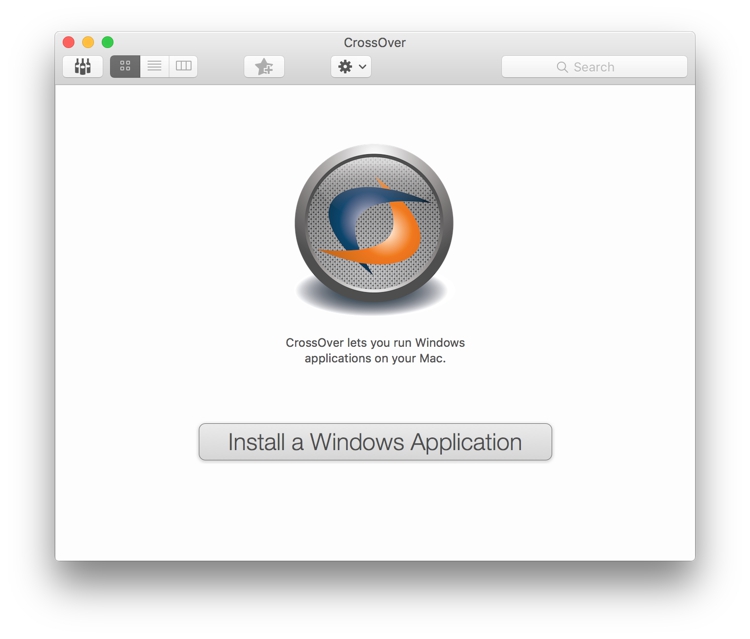
CrossOver comes in at a $60 price tag, and offers a fully-functional 14-day trial. The website has a neat search feature that will allow yous to check for back up of your target application earlier yous brand the purchase, and the trial should aid verify the findings for yourself as well.
Encounter As well: How to Speed Upwards Your Mac
Terminal Words
While running Windows on Mac OS 10 isn't an exact science, there are a number of good options available that you can employ, depending on your needs and budget. No matter which option you lot consider, there will be tradeoffs and cost factors that will come into play. With the exception of CrossOver, you volition need to purchase the license for the Windows version that you lot're running, so that is almost a abiding. Kicking Campsite is gratis, but the hassle of switching back and forth might not make it worth your while. However, if you plan on running games on your Mac, Boot Camp is the best choice, as a virtual machine or container can never be as smooth equally existent, hardware level integration. CrossOver might exist attractive because it doesn't entail a Windows license price and is about $20 cheaper than both Parallels and Fusion, only you must ensure that your target apps will piece of work with this solution, lest those $60 would go to waste matter. Parallels and Fusion are both solid, merely in the stop, they are virtual machines however.
In the end, the choice is yours. Luckily, all solutions discussed here offer free trials, and fully functional ones, besides, so I strongly urge you to become through them yourself and decide based on your circumstances. Oh, and let us know what you picked and why in the comments below.

Source: https://beebom.com/run-windows-mac/
Posted by: allencambactint1987.blogspot.com
0 Response to "4 Best Ways to Run Windows On Mac (How to)"
Post a Comment